
How to Control Cockroaches

Cockroaches are probably the most unwanted pest in the home. Their connection with filth and quick scurrying movements certainly create a lot of anxiety. For some, the appearance of just one cockroach can make them feel as if they are a bad housekeeper (although often it is not their fault).
Fortunately with a combination of good prevention tips and suitable pest control products, most cockroach problems are easy to control.If you want to know a bit more about cockroaches – types of cockroaches, the cockroach life cycle and other interesting facts, read one…
Cockroach Identification
Types of Cockroaches
There are over 4500 species of cockroach globally, but only around 30 of them are considered as pests. Here in Australia there are 6 common pest cockroaches.
Pest cockroach species
Generally speaking the pest cockroaches can be broken down into “large cockroaches” and “small cockroaches”.
Large cockroaches
The large cockroach species typically live outside the home in drains and gardens, but will also set up home in the roof void and sub-floor. Generally these cockroaches come inside looking for food or moisture, or simply “by accident”. These cockroaches are often referred to as peridomestic cockroaches as they spend time inside and outside buildings.
The common large cockroach species in New Zealand are the Australian cockroach, American cockroach and Gisborne cockroach (shining cockroach).

Australian cockroach

American cockroach

Image credit: Nurg. CC BY 4.0
Gisborne cockroach (Shining cockroach)
Small cockroaches
The small pest cockroach species typically live exclusively inside the home. As such, these cockroaches are often referred to as domestic cockroaches. The two most common small cockroach species are the German cockroach and brown banded cockroach.
Both these species are able to set up their home in the smallest of places – including door hinges, dishwashers, toasters, microwaves – and with their prolific breeding, they can be a lot more difficult to spot and control.

German cockroach
More information on German cockroaches.

Brown banded cockroach
Back to Cockroach Menu
Key Cockroach Facts

- Cockroaches will eat virtually anything, even each other!
- German cockroaches do not stray far from their hiding places – adults only travel 1-2 m from their harborage. The young cockroaches do not leave their hiding place at all, eating the vomit and faeces of other cockroaches to survive!
- The American cockroach has been measure running at a speed of 5.4 km/h, which would be comparable to a human running at 330 km/h.
- Cockroaches are thigmotactic which means they like confined spaces. It also explains why the tend to run around the perimeter of rooms (so they can feel the wall).
- Although many adult cockroaches have wings, most species do not fly. Adult American and Australian cockroaches will fly, but only in warmer weather.
- The names of the pest cockroaches German, American, Australian don’t really describe where they come from, as they are found in many countries. For example in Germany, the “German” cockroach is sometimes called the “Russian” cockroach!
COCKROACH DISEASES:
Given the places that cockroaches hide, including the sewer, drains and in the garbage, it is perhaps not surprising they are viewed as “dirty” animals. Indeed, cockroaches carry a range of diseases, including Salmonella, dysentery and polio, as well as a number of other bacteria that give rise to stomach upsets.
However, it is the shed cockroach skins and droppings that cause the biggest problem, as they contain allergens. In cockroach infestations these can give rise to allergic reactions and asthma – cockroach infestations are probably the highest cause of asthma in many inner city apartment blocks.

Life-cycle of a Cockroach


Cockroaches are a primitive insect. Cockroaches hatch from eggs into nymphs (young cockroaches) and go through several stages before becoming an adult. As the cockroach nymphs are similar to the adults (just smaller and lacking in wings), this process is called incomplete metamorphosis. This is unlike the transformation of a caterpillar into a butterfly which is a complete metamorphosis (complete change in body form).
The length of the life-cycle depends on the species (generally larger species have a longer life-cycle) and the temperature (higher temperatures mean a faster life-cycle). The life-cycle but can vary from between 3 months and 2 years.
Cockroach eggs
Cockroaches don’t lay eggs but have egg cases. These egg cases can contain between 16 and 40 eggs, depending on the species – smaller species have more eggs. The eggs develop into nymphs inside the egg cases and emerge as live young. Some cockroach species, such as the German cockroach carry the egg case until just before hatching, others such as the American cockroach place their egg cases near a food source for later hatching.
Egg cases in cardboard boxes are a common way cockroach population get started in homes!
Baby cockroaches
“Baby” cockroaches are called nymphs. These are the young cockroaches that go through several nymphal stages or instars before turning into an adult. The first instars can be very small – newly hatched German cockroaches are only 3 mm long.
Depending on the species they may have between 6 and 14 instar stages before developing into the adult cockroach. During each stage they get bigger, with the wings gradually forming through each stage so they are fully formed in the adult.
White cockroaches
Every now and then a homeowner will spot a white cockroach. Alas this isn’t a new species or a freak of nature, but a normal part of the cockroach life-cycle. As cockroaches have a hard cuticle, they cannot grow continously. When they are ready to grow, they shed their skin. When they emerge their cuticle is white and soft. This gives them the chance to expand and grow. Over next 1-2 hours the cuticle darkens and hardens.
Flying cockroaches
Only the adult cockroaches have wings, but in some species only the male has functional wings and in others both the male and female cannot fly. Often the cockroaches will only fly in warmer weather and even then it is often a predator escape behaviour.
Back to Cockroach Menu
Signs of a Cockroach Infestation
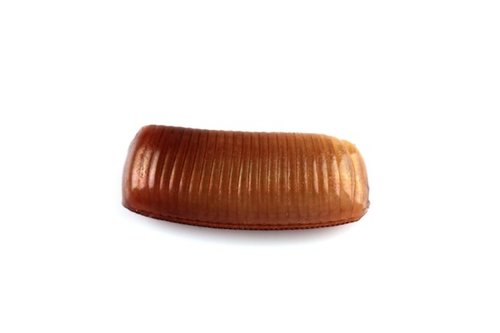

Cockroach droppings
Cockroach droppings are obviously gross, but if you know what you’re looking for, they can be a sign you have a cockroach problem.
Large cockroaches produce more obvious droppings, more like a small pellet, whereas German cockroaches produce droppings which are more like spot, often with some liquid. When there are a large number of spots in one location, it indicates you have a major infestation on your hands!
Cockroach droppings are a major source of allergens that can cause asthma.
Back to Cockroach Menu
Cockroach Prevention Tips

Good Hygiene Is Critical:
Back to Cockroach Menu
Cockroach Control Tips


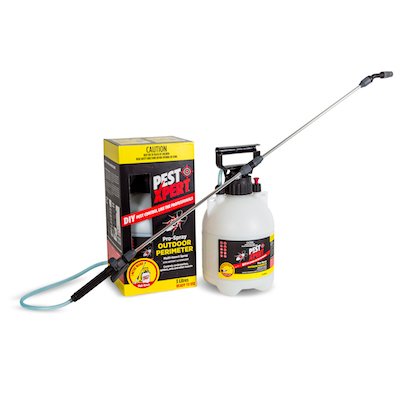
Cockroach Products
A range of products are available to control cockroaches. Whereas a cockroach spray inside and outside the home may be good for large cockroaches, for small cockroaches (German cockroaches) and cockroach infestations, it is often necessary to use a number of different products in combination.
Cockroach baits are the best option for controlling infestations in kitchens and sensitive areas. They can also be used as a preventative treatment in properties which have ongoing cockroach problems (as is often the case in blocks of units where cockroaches can move between units).
Cockroach baits come into two forms; solid bait in plastic bait stations as found in most supermarkets and cockroach gel baits which are used by pest professionals. Whichever bait product you use, it’s important to know how to use a cockroach bait, so that you get the best results.
COCKROACH GEL
Cockroach gels are preferred by pest professionals as they are generally more attractive than solid baits but most importantly they are more flexible in application. Most homeowners will not have used cockroach gel baits before so it’s important to know how cockroach gels work.
- Bait can be placed on vertical and horizontal surfaces and even in tight areas such as cupboard hinges, allowing you to target cockroach hiding places.
- As German cockroaches don’t travel far from their hiding places (and you don’t always know where they are hiding!), lots of small bait placements rather than a few bait stations will deliver better results.
How long do cockroach bait take to work?
Individual cockroaches will die within 24 hours of eating cockroach bait, but it can take 1-2 weeks for enough cockroaches to eat the bait to spread the insecticide through the population to achieve complete control. In severe infestations it can take longer and more than one application.
How long do cockroach baits last?
The attractiveness of cockroach baits declined overtime. After placement it gradually dries out and becomes less attractive. It is generally recommended that cockroach bait placements are replaced every 3 months – simply scratch off the gel dot and place a new one.
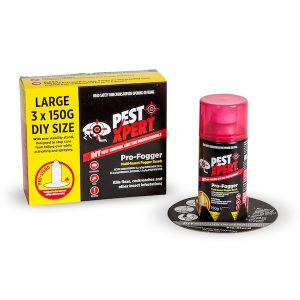
“Cockroach bombs” also know as cockroach foggers or total release aerosols, are a great way to easily treat a whole room. The ultra fine mist they can get into the cracks and crevices where the cockroaches are hiding. Although they are great for cockroach infestations, they can also be used as a preventative measure. To ensure the cockroach bomb is used safely and effectively it is important to know how to use a cockroach bomb.
PestXpert Pro Fogger is a unique cockroach bomb formulation as it contains a combination of 3 active ingredients to create a professional formulation:
- An insecticide to kill cockroaches and other pests on contact
- A synergist to magnify the effect of the insecticide so it works even at very low levels
- An insect growth regulator that breaks the breeding cycle and prevent pest outbreaks for many months
How long do cockroach bombs take to work?
Cockroach bombs start to work instantly and many pests in the room will already be dead by the time you re-enter the room. The residual insecticide will continue to kill any new insects that venture into the room.
How long do cockroach bombs last?
Cockroach bombs can keep killing cockroaches for several months (3-6 months). However, it will continue to kill a wide range of insects, sometimes for even longer.
Are cockroach bombs safe?
Yes, cockroach bombs are safe, as long as you read the label and follow all the safety directions. It is especially important that all sources of ignition are turned off in rooms to be treated and no-one should be in the room during treatment or for 2 hours after treatment. See the Pro-Fogger page for more safety tips.
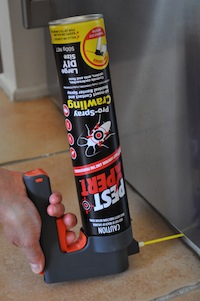
A cockroach spray is a must in any Australia kitchen cupboard! But to get the best performance it’s important to know how to use a cockroach spray and how surface sprays work.
PestXpert Pro Spray Crawling aerosol provides a professional formulation and aerosol delivery system to allow easy, accurate application for quick kill and long lasting protection.
- Dual insecticide formulation for fast kill and long lasting protection
- Extendable nozzle to access cracks and crevices
- 360 degree valve, so you can spray upside down to get under cupboards and appliances
How long do cockroach sprays take to work?
Individual cockroaches sprayed directly should be dead within minutes. The residual insecticide left on the surface continues to kill insects, but this take a bit longer to act – insects crawling across the surface need to pick up a lethal dose and as it is dry, it take a bit longer to penetrate the insects cuticle.
How long do cockroach sprays last?
The duration of protection depends on the formulation, the type of surface it is sprayed on, the temperature and the amount of sunlight it gets. PestXpert Pro-Crawling lasts for at least 3 months under the toughest conditions but will last considerable longer on surfaces and under conditions which are less aggressive.
Cockroach traps are sticky glue traps that are used for monitoring cockroach problems. Although they can certainly catch a lot of cockroaches (especially during a cockroach infestation), they will not control the problem.
Which Products to Apply When?
Cockroach baits are often the best option for eliminating cockroach infestations, especially of German cockroaches (the ‘small ones’) which live inside. Indeed German cockroaches are one of the most difficult pests to control (even for professionals), so you need to know how to get rid of small cockroaches.
If you have a cockroach infestation, using a cockroach / flea total release aerosol (also called a fogger or “bomb”) is also a good option for getting numbers under control quickly and to also provide residual control. You will need one aerosol for each room. The treatment may need to be supplemented by an insecticide spray to get into some cracks / crevices / cupboards where the fogger may not have reached.
A crawling insect aerosol or ready-to-use pump spray are the best options for a preventative measure, particularly if you are trying to get rid of large cockroaches which live outside and find their way inside. Spraying insecticide around the perimeter of rooms, in cupboards and other insect hiding places, as well as spraying the outside perimeter of the home, garbage bins and sub-floor areas, will keep the cockroaches out of the house, preventing a potential pest outbreak. These treatments may need to be repeated more than once a year.
Crawling insect aerosols are the best product to kill any cockroach you see. These are designed to coat the insect with insecticide providing rapid knock down and kill. Flying insect aerosols will work but are not designed for crawling insects and so take a lot longer to work.
Back to Cockroach Menu
PestXpert Products For Cockroaches


Back to Cockroach Menu
FAQs about Cockroach Control
German cockroaches only live indoors, primarily around kitchens, unless you have a major infestation. Due to their small size, they can hide in the smallest of cracks and crevices. The use of cockroach baits, especially gel baits, is the best product to target German cockroaches. Learn how to use cockroach bait to get rid of German cockroaches.
Cockroaches tend to congregate in the kitchen as there is plenty of food and water. They will typically hide behind and under cupboards and appliances. If you have a German cockroach infestation, they can get into all manner of small cracks and crevices including inside appliances, inside dishwasher control panels and around door hinges. It’s not appropriate to spray in a lot of these places as they are food preparation surfaces. The use of cockroach gel baits is the best option.
Cockroaches will almost each anything, not just food but also paper and even clothes, so, garbage is a smorgasboard for cockroaches! However, they are particularly attracted to oily, fatty residues, so deposits around cookers and grills are very attractive. This is why regular cleaning in the kitchen and a good hygiene regime for garbage can really help to prevent cockroach problems.
Back to Cockroach Menu
PestXpert Blog
For the dedicated PestXperts…
The PestXpert Blog gets updated regularly with articles on pests, products and tricks of the trade.
Take your pest control knowledge to the next level and say goodbye to pest problems.
-
 Cockroach sprays – How do they work?
We’ve all seen the ads – the homeowner sprays the perimeter of the room with an insecticide spray, a cockroach (of the computer animated variety) approaches the treated area and zap – the cockroach is killed by an invisible force…
-
 Cockroach infestation? Use a cockroach bomb!
If you have a persistent cockroach problem or maybe a cockroach infestation, you need to pull out the “big guns” and a cockroach “bomb” is just the ticket!Insecticide “bombs” or “foggers” are technically known as “total release aerosols” – once…
-
 How to get rid of large cockroaches
Large cockroaches certainly have a big “eek” factor. Their large size, fast scurrying movements and ability to fly are all too much for some people. The good news is that if you have a problem with large cockroaches, they are…